Could the ingredient that changes your next stir fry be sitting quietly in a can? Straw mushrooms deserve a closer look, especially if you want more variety in your plant based meals without a complicated shopping list.
I like an ingredient that earns its place through usefulness. These small mushrooms suit soups, curries and quick vegetable dishes, but choosing and preparing them properly matters. Fresh and canned versions need different treatment, and a little attention before cooking can improve the finished dish.
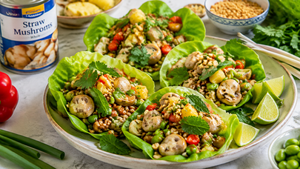
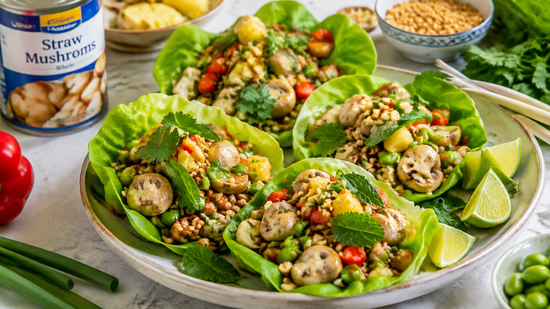
Here, I explain what to buy, which preparation steps are worthwhile, and how to turn a can into lemongrass lettuce cups with edamame and toasted brown rice. If your mushroom routine begins and ends with white buttons, this is an inviting place to branch out.
What Are Straw Mushrooms, Really?
The species is Volvariella volvacea, an edible mushroom associated with warm growing conditions and cultivation on agricultural materials such as rice straw. That growing material explains the familiar common name.
The small oval examples sold in cans are usually harvested before their caps fully expand. At this young stage, an enclosing structure called the volva surrounds the developing mushroom. Cut one lengthwise and the tucked cap becomes easier to see.
As the mushroom develops, that enclosure breaks and the cap opens. I would describe this as a change in appearance and texture rather than claim that every opened specimen is unsuitable for cooking. For the recipe below, young whole canned examples make a convenient starting point.
A Safety Note Before Anyone Goes Foraging
I would never use this article to identify a wild mushroom. Young edible and poisonous species can share features that are difficult for an inexperienced person to distinguish.
The Australian National Botanic Gardens discusses the dangerous resemblance between death caps and edible paddy straw varieties. My advice is straightforward: buy cultivated mushrooms from a reputable supplier. Photographs, familiar shapes and cooking do not establish that a wild mushroom is safe.
Taste and Texture: Why They Earn a Spot in My Pantry
I think texture is the best reason to try straw mushrooms. Their smooth surface and tender bite offer a different experience from a firm, browned slice of cremini. The flavor is generally mild, leaving room for ginger, lemongrass, chili and fresh herbs.
Canned products vary, so I would taste a rinsed, commercially canned example before choosing a sauce. A pronounced briny note calls for restraint with tamari. A relatively neutral product gives the other ingredients more room.
How They Stack Up Against Other Mushrooms
I would choose white buttons or cremini when I want a firmer bite. Shiitakes offer a more pronounced mushroom character, while oysters bring a different shape and a tender texture when properly cooked.
None is an exact replacement. Rather than expect identical results, I choose according to the dish: small whole pieces for lettuce cups, torn oyster pieces for a skillet meal, or sliced buttons for an everyday vegetable sauté.
Fresh vs. Canned Straw Mushrooms: Which One Belongs in Your Cart?
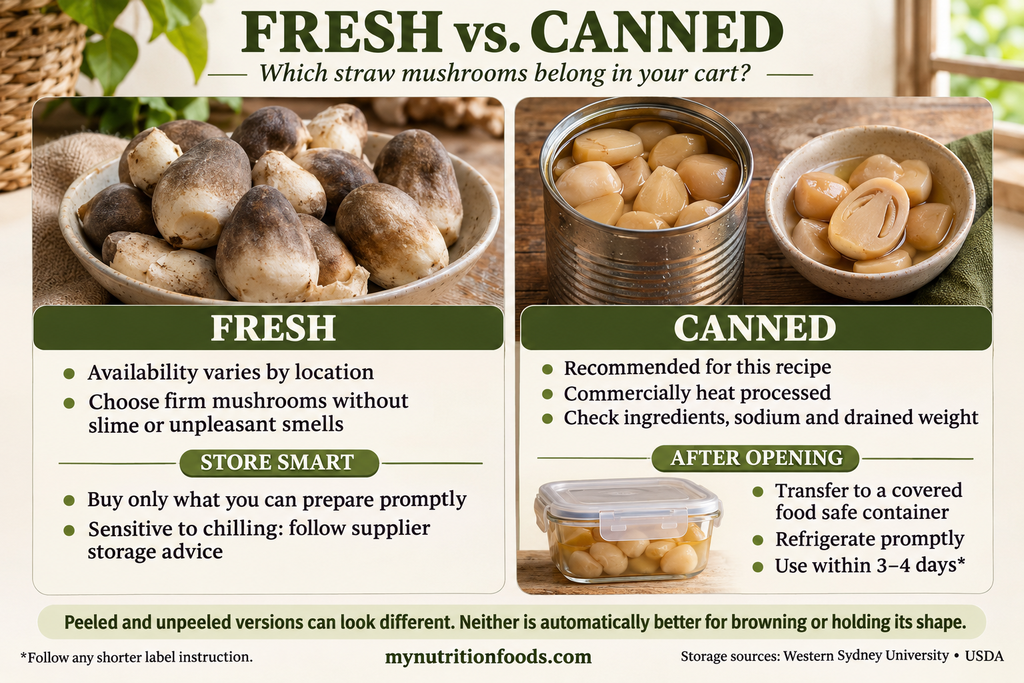
For this recipe, I recommend canned mushrooms because the instructions are designed around an ingredient that has already undergone commercial heat processing. I check the ingredient list, sodium information and drained weight before buying.
Fresh availability depends on location. I look for sound specimens without slime or an unpleasant smell and ask the supplier about handling. Peeled and unpeeled canned versions can look different; I would not assume one always browns better or holds its shape longer.
Storing Them Properly
Fresh examples require unusual handling. Research from Western Sydney University reports chilling injury below their optimum storage temperature. I therefore recommend buying only what you can prepare promptly and following the supplier’s specific advice, rather than applying ordinary mushroom storage rules.
Opened cans are different. I transfer leftovers to a covered food safe container and refrigerate promptly. USDA guidance gives three to four days for opened low acid canned foods; I follow any shorter label instruction. There is no need here to prescribe daily water changes.
Straw Mushrooms in a Plant Based Diet: What They Bring to Your Plate
I see mushrooms primarily as a way to add variety and a satisfying texture. In this meal, edamame supplies a more substantial protein component, while brown rice and vegetables help turn the filling into something more complete.
I would avoid calling a small mushroom serving a major protein source or promising that it improves energy, treats illness or replaces other nutritious foods. Nutrient amounts depend on the product, preparation and portion. For packaged versions, the label is more useful than an unexplained figure borrowed from a different mushroom species.
A Word About Sodium
I compare sodium per serving and check how many servings the container holds. Packing liquids differ, so I do not assume every can contains the same amount.
Draining and rinsing remove the packing liquid, but I would not promise a particular sodium reduction without product specific evidence. My practical approach is to start with less tamari, taste the finished filling, and adjust gradually.
Prep Like a Pro: How to Banish That Tinny Taste
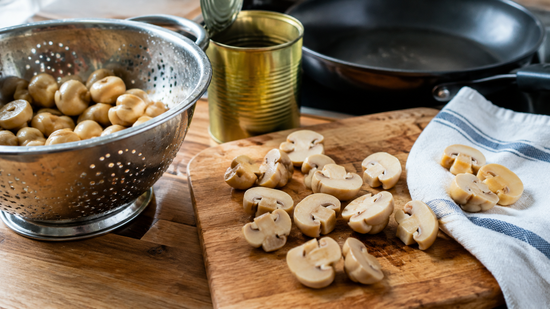
When preparing canned straw mushrooms, I begin by draining them and rinsing under cool running water. Then I halve larger pieces lengthwise and pat the cut surfaces dry with a clean towel.
If an unwanted canned flavor remains, I suggest an optional one minute blanch in boiling water, followed by draining and drying. I treat that as a flavor preference, not a necessary safety step or a guaranteed way to firm the mushrooms.
Removing surface moisture helps when attempting a lightly golden edge. I keep expectations realistic: a wet, commercially canned ingredient will not necessarily brown like a fresh cremini slice.
For fresh purchases, I follow separate preparation and cooking advice from the supplier. The brief reheating instructions in my recipe should not automatically be applied to uncooked substitutes.
Three Mistakes That Ruin a Good Dish
First, I avoid seasoning before considering the packing liquid and tamari. The filling can become too salty quickly.
Second, I avoid putting wet pieces into an overcrowded skillet when browning is the goal. Working in batches gives moisture somewhere to escape.
Third, I distinguish reheating from cooking. Canned mushrooms are already processed, while fresh mushrooms and some frozen ingredients need additional cooking. Matching the method to the actual product matters more than following one universal timer.
My Favorite Ways to Cook Them
I would start with a simple vegetable stir fry or the lettuce cups below. Both make it easy to judge the ingredient without burying it beneath a heavy sauce.
For soups and curries, I add canned pieces toward the end and heat them through. That recommendation concerns an already cooked product; it is not a rule for every fresh mushroom.
Other possibilities include noodle bowls, vegetable dumpling fillings and rice dishes. I keep the surrounding ingredients familiar on a first attempt. Try ginger and greens one evening, then explore a different seasoning combination once you know which textures you enjoy.
Lemongrass Mushroom Lettuce Cups with Edamame and Crispy Brown Rice
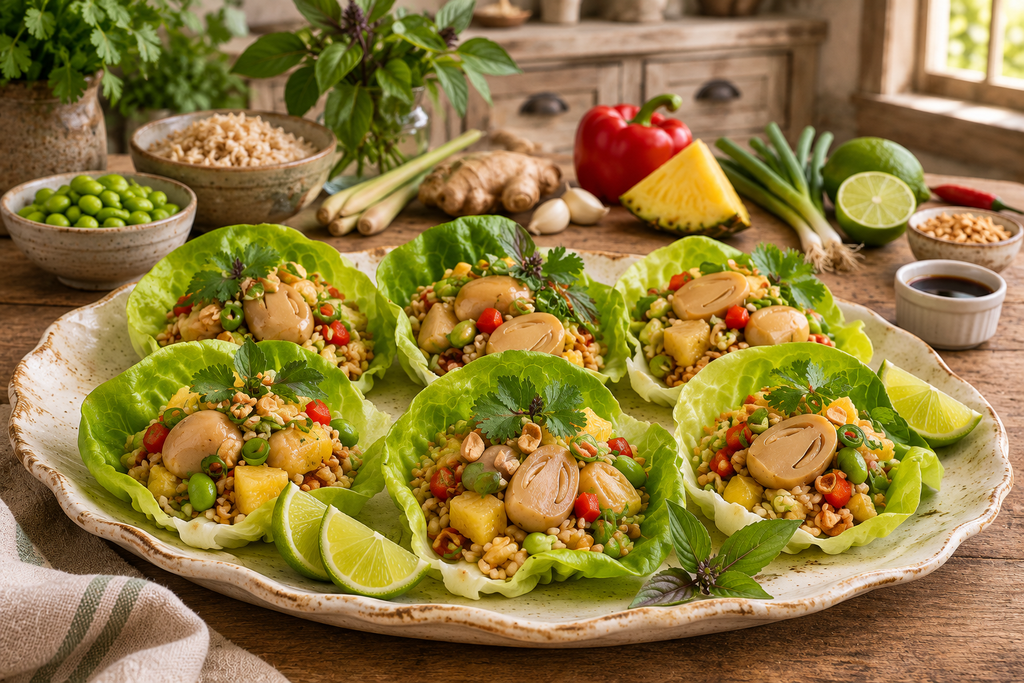
I have retained the bright combination of straw mushrooms, edamame, pineapple and herbs, with an important clarification: dry skillet rice may turn toasted or chewy rather than consistently crisp. I aim for lightly golden grains and let any crispness be a bonus.
Yield: About eight lettuce cups, serving two as a light meal or four as a starter.
Estimated time: Fifteen minutes preparation and fifteen minutes cooking, with cooked rice and prepared edamame available.
Ingredients
- One 425 g can whole mushrooms, approximately 200 to 250 g drained; check the label
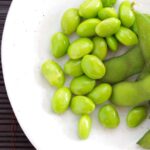
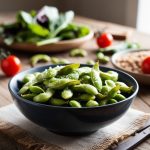
- One cup cooked shelled edamame, prepared according to package instructions
- One cup cooked brown rice, safely chilled
- One lemongrass stalk, tender inner portion very finely minced
- Two garlic cloves, minced
- One tablespoon grated fresh ginger
- One small red bell pepper, finely diced
- Half a cup finely diced fresh pineapple
- Two green onions, thinly sliced
- One tablespoon low sodium tamari, plus more to taste
- One tablespoon lime juice, plus wedges for serving
- One small red chili, minced, optional
- Two to three tablespoons water, as needed
- Eight large butter lettuce leaves, washed and dried
- A small handful of cilantro, mint or Thai basil
- Two tablespoons chopped unsalted roasted peanuts
Instructions
- Prepare the filling ingredients. I drain, rinse, halve and dry the mushrooms. If choosing the optional blanch, I complete that before drying. I cook the edamame according to its packaging rather than rely on thawing alone.
- Toast the rice. I warm a suitable nonstick skillet over medium heat, following its manufacturer’s instructions. I spread the rice thinly and cook for about five minutes, turning occasionally, until hot with some golden patches. I transfer it to a bowl.
- Warm the mushrooms. I place the cut pieces in the skillet for two to three minutes. If they stick, I add a little water rather than force browning or overheat the empty pan.
- Cook the aromatics. I add two tablespoons of water, lemongrass, garlic and ginger. I stir for about two minutes, keeping enough moisture in the pan to prevent scorching.
- Finish the filling. I add the pepper and cooked edamame, stirring until everything is hot and the pepper suits my preference. I add tamari, lime juice and optional chili, then remove the skillet from the heat.
- Fill and serve. I fold in pineapple and green onions, taste, and adjust the seasoning. I divide rice and filling among lettuce leaves, then add herbs and peanuts. I serve immediately with lime wedges.
Tips and Variations
I use sunflower seeds instead of peanuts when needed and check ingredient labels for relevant allergies. For a gluten free version, I choose tamari specifically labeled gluten free.
For a warm bowl, I serve the filling over extra rice and add shredded lettuce afterward. I keep the herbs separate until serving so their freshness remains noticeable.
Can’t Find Them? Smart Substitutes That Work
For the lettuce cups, I would choose chopped oyster mushrooms or small cremini pieces. I cook fresh substitutes separately until properly cooked and pleasantly tender before adding the remaining filling ingredients. Their cooking time may differ from the canned version.
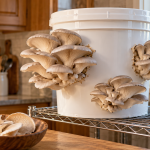
Enoki suits some soup applications, but I do not treat it as an interchangeable quick garnish. The FDA advises thorough cooking, particularly highlighting risks for vulnerable groups. Shape, cooking requirements and moisture content all matter when making substitutions.

Your Questions, Answered
Can I Eat Straw Mushrooms Straight From the Can?
An intact, commercially canned product labeled ready to eat has already been heat processed. I follow its label, rinse if desired, and warm it for this recipe. That advice does not cover home canned or damaged products.
Are They the Same as Baby Button Mushrooms?
No. White buttons belong to Agaricus bisporus. I would not use their small size as evidence that they are the same species or require identical handling.
How Long Do Unopened Cans Last?
I follow the manufacturer’s storage and date guidance. I discard bulging, leaking or badly damaged cans instead of tasting their contents to judge safety.
Where Can I Buy Them?
I would check Asian grocery stores, supermarket international aisles and established online food retailers. Before ordering, I compare drained weight, ingredients and delivery cost rather than judge value by can size alone.
Ready to Give Them a Try?
I suggest starting with one can and a meal you already enjoy. The lettuce cups offer a fresh direction, while a familiar vegetable dish makes an equally approachable introduction.
Before shopping, I would decide how I plan to serve straw mushrooms and check what is already in the kitchen. A lettuce cup meal needs sturdy leaves and a filling that is moist without dripping. If the mixture looks wet, I let excess liquid evaporate briefly before adding pineapple, herbs and the final squeeze of fresh lime juice.
Choose your ingredients, read the labels, and prepare the filling before assembling. Then tell me: would you serve yours in lettuce leaves or over warm brown rice?