
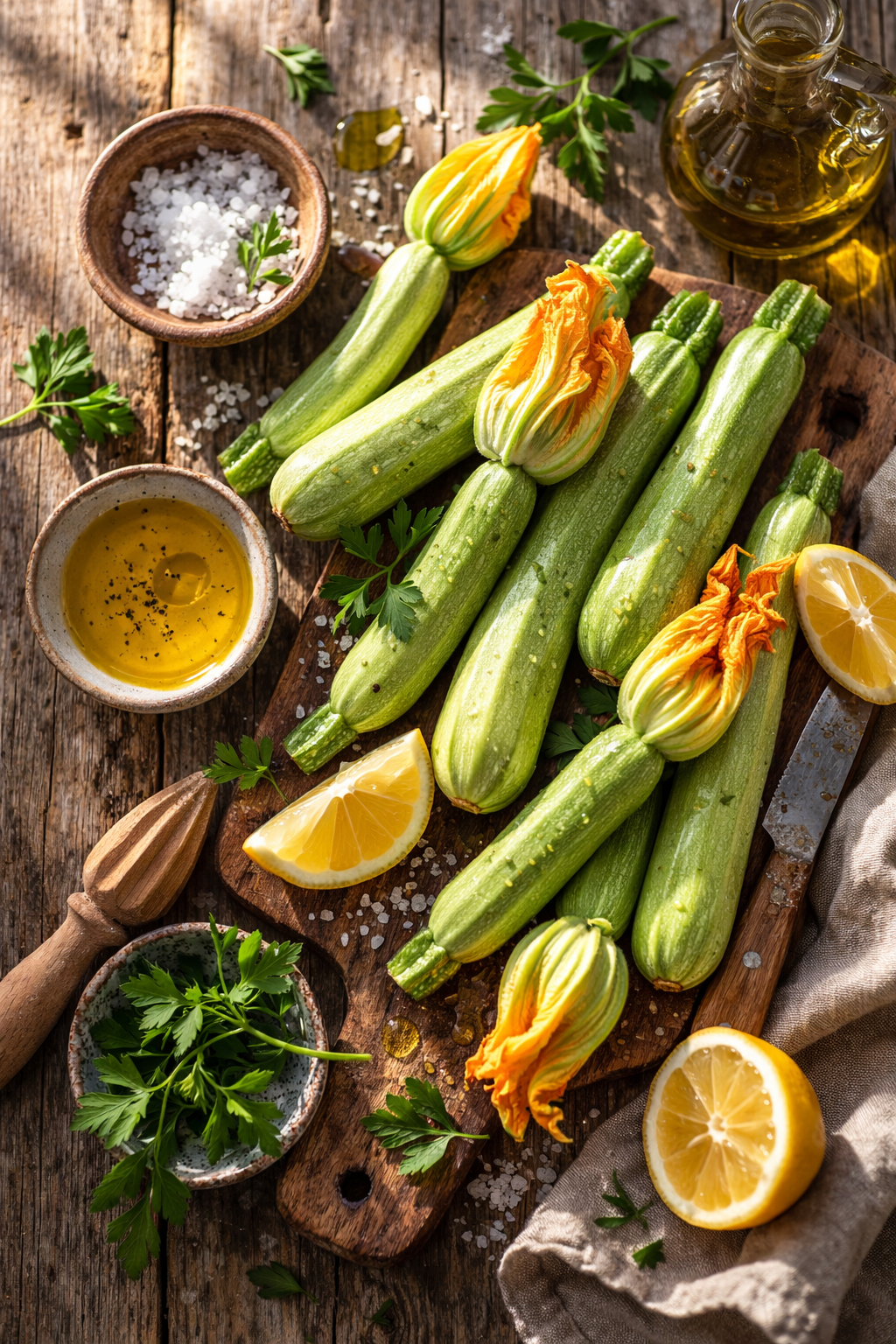
I still remember the first time I truly paid attention to Italian zucchini, not as a side dish, not as a filler, but as the undisputed star of the plate. It was early summer, and I had picked up a few slender pale green ones almost absent mindedly. But once I cooked them simply and let their natural flavor shine, everything shifted. From that moment on, I stopped treating zucchini as a background and started building meals around it.
From that morning forward, Italian zucchini earned a permanent, non-negotiable place in my plant-based kitchen, and it has never left. What drew me in initially was its delicate skin and mild, slightly sweet flavor, so different from the thick skinned, watery zucchini I had grown up eating.
What kept it in my rotation was everything else: its nutritional density, its culinary versatility, and its deep roots in a food culture I deeply respect. If you have not yet given this vegetable the attention it deserves, I hope this article shifts your perspective the same way that first experience did for me.
The Nutritional Profile That Makes Italian Zucchini a Plant-Based Essential
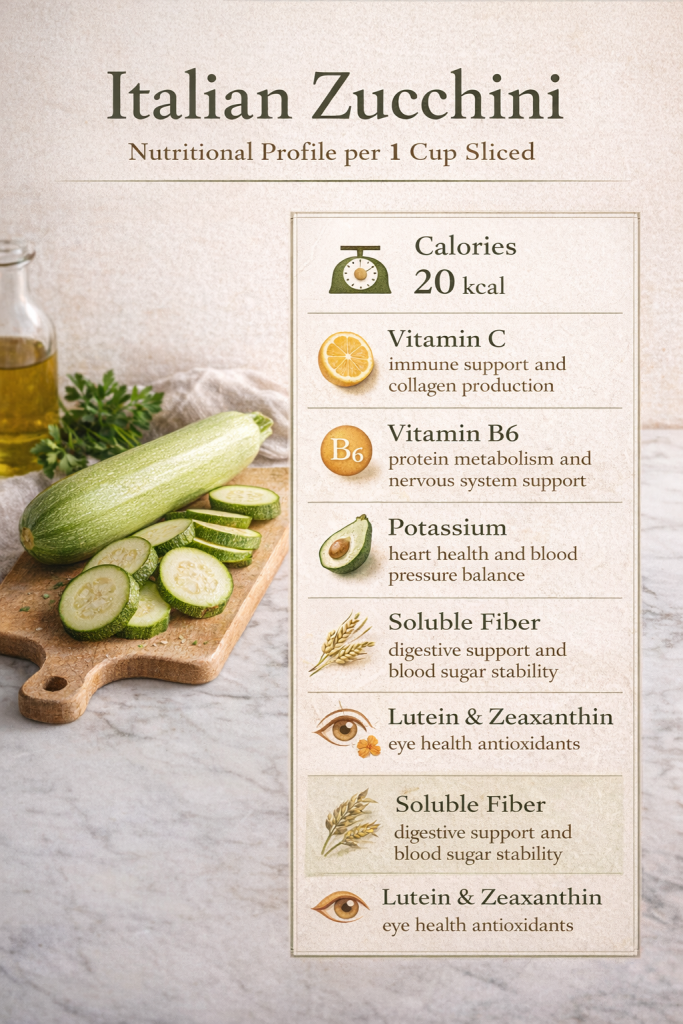
One of the reasons I prioritize Italian zucchini in my meal planning is its impressive nutritional profile relative to its caloric footprint. A single cup of sliced zucchini contains roughly 20 calories, yet delivers a meaningful range of vitamins and minerals that support whole-body health. It’s a reliable source of vitamin C, which supports immune function and collagen synthesis, and vitamin B6, which plays a critical role in protein metabolism and neurological health.
Potassium is another standout mineral here — essential for heart health and blood pressure regulation, and something plant-based eaters should consciously include across their meals. While zucchini isn’t a high-fiber food in the way that legumes or whole grains are, it contributes soluble fiber that supports digestive regularity and helps maintain healthy blood sugar levels.
It also contains antioxidants including lutein and zeaxanthin, two carotenoids closely associated with long-term eye health. For anyone committed to eating in a way that supports lasting wellness rather than short-term trends, this vegetable consistently checks the boxes that matter most.
The Italian Culinary Roots Behind This Beloved Vegetable
Zucchini’s Place in Italian Food Culture
To appreciate Italian zucchini fully, you have to understand where it sits within Italian food culture — and that position is one of deep, enduring respect. Zucchini, known in Italy simply as zucchine, has been cultivated in Italian gardens for centuries and is treated not as a garnish but as a genuine ingredient worthy of thoughtful preparation.
Regional Italian cooking has always championed simplicity: the best olive oil, the freshest produce, and techniques that honor the ingredient rather than mask it. In southern Italy, zucchini is commonly prepared with garlic, fresh herbs, and good olive oil — a combination so simple it sounds almost effortless, yet the result is deeply satisfying.
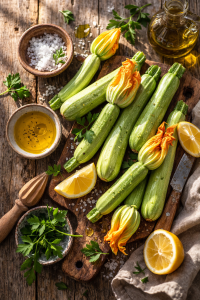
In the north, it appears in risottos and frittatas, cooked slowly to develop natural sweetness. The blossoms are stuffed, fried, or added raw to salads. Nothing is wasted. This philosophy of using every part of the vegetable is one I’ve absorbed entirely into my own plant-based cooking practice.
Connecting Italian Tradition to Modern Plant-Based Eating
What strikes me most about Italian culinary tradition is how naturally it aligns with plant-forward eating. Long before “plant-based“ became a recognizable label, Italian home cooks were already building meals around vegetables, legumes, and grains, using meat sparingly if at all.
The cucina povera, or “poor kitchen,” of rural Italy produced some of the most nourishing, flavorful food in the world precisely because it centered whole, seasonal ingredients. There was no excess, no waste, and no reliance on anything that could not be grown, preserved, or foraged locally.
Italian zucchini is a direct product of that tradition. Bringing it into a modern plant-based kitchen feels less like following a contemporary trend and more like returning to something ancient, proven, and quietly wise. That continuity is part of what makes cooking with it feel so meaningful to me.
How I Select, Store, and Prep Italian Zucchini at Home
What to Look for at the Market
When I’m choosing Italian zucchini at the farmers market or grocery store, I look for smaller ones, ideally between five and seven inches long, including the round varieties when they are available. Smaller zucchini are younger, which means the flesh is firmer, the seeds are less developed, and the flavor is more concentrated and naturally sweet.
I avoid anything that feels soft when gently pressed, has dull or blemished skin, or looks oversized. A truly fresh one will feel almost heavy for its size and carry a slight healthy sheen across the skin. I also pay close attention to the cut end. A dry, shriveled stem tells me it has been sitting too long, while a moist, clean cut is always a green light.
These small observations take only seconds at the market, but they make a significant difference in the quality and flavor of everything I cook at home.
Storage and Prep Methods I Swear By
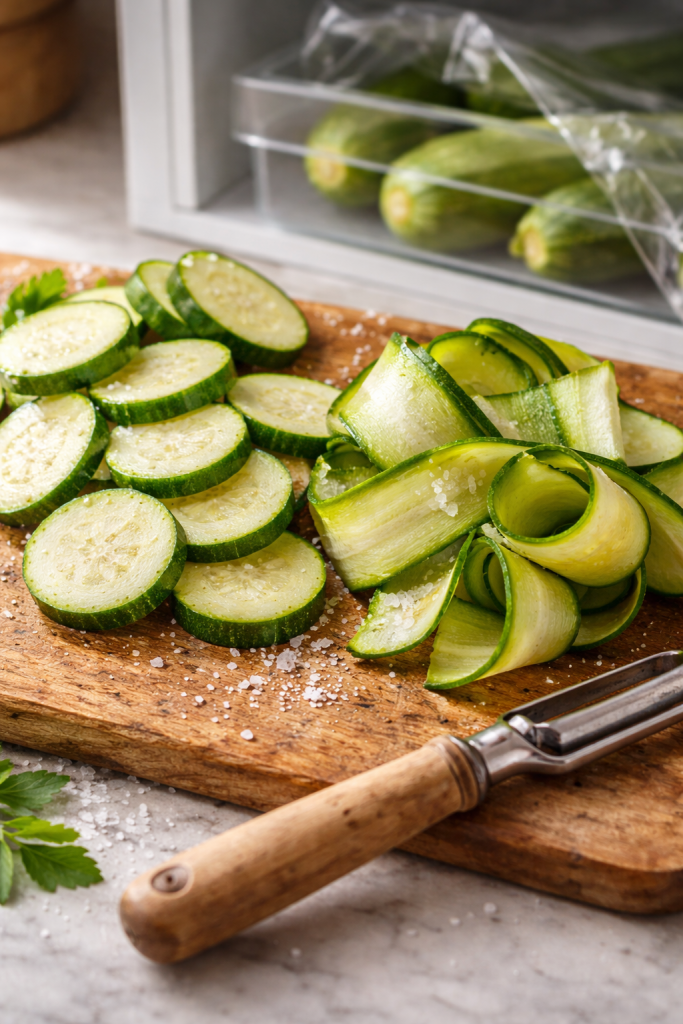
At home, I store Italian zucchini unwashed in a loosely sealed bag in the refrigerator’s crisper drawer, where it stays fresh for up to five days. I never wash it until I’m ready to use it — excess moisture on the skin accelerates spoilage faster than most people realize.
When it comes to prep, I rarely peel it. The skin is thin, tender, and nutritious, so I simply scrub it well under cold water before slicing. Depending on the recipe, I cut it into rounds, long ribbons using a vegetable peeler, or halve it lengthwise for grilling.
When I’m preparing multiple zucchini at once — especially for ribbons, thin half-moons, or batch cooking — I rely on a powerful, precision food processor. A machine like this gives you uniform slices in seconds, which means better texture and more even cooking. For anyone who cooks regularly or prefers to save energy during prep, this becomes an incredibly supportive tool.
One preparation habit I always return to is salting sliced zucchini and letting it rest for 15 to 20 minutes before cooking. This draws out excess moisture and concentrates the flavor in a way that makes a genuinely noticeable difference in the finished dish – a small step that is always worth the extra time.
Why the Breville Sous Chef 12 Cup Food Processor Stands Out

Breville BFP660SIL Sous Chef 12 Cup Food Processor, Silver
- Precision food preparation is easier than ever. Slicing, chopping, shredding, and even kneading bread is no problem for this kitchen workhorse. With three feed chute options and adjustable slicer, the Sous Chef 12 turns food prep into pushing a button
- S-BLADE SYSTEM: Breville food processor’s micro-serrated S-Blade delivers swift action for consistent chopping, mixing, and processing of a variety of ingredients, including nuts, garlic, onions, and other veggies
- MULTIPLE CHUTES: Three feed chute options – 5” large feed chute, 2 ¾” mid feed chute and 1 ½” mini feed chute prevents carrots from tipping over; Multiple processor chutes designed to accommodate many shapes and sizes for easy and fast food preparation
- VARIABLE SLICING DISC: The variable slicing disc has 24 settings from paper thin 0.3mm to thick cut 8.0mm
A Unique Plant-Based Recipe Featuring Italian Zucchini
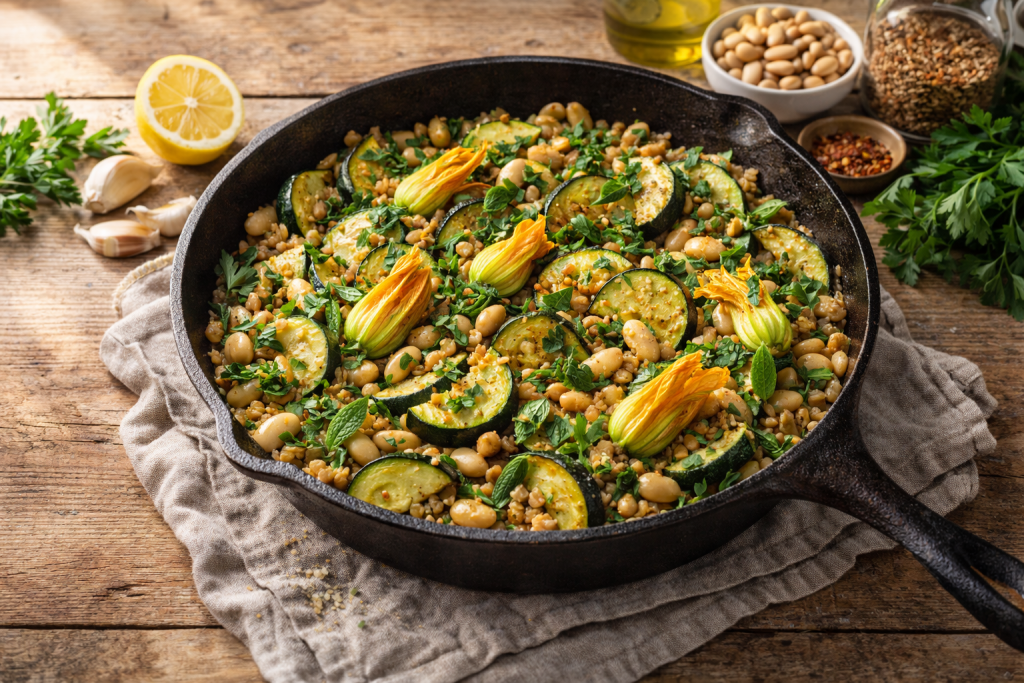
Lemony Italian Zucchini and White Bean Skillet with Herbed Farro
This is one of those recipes I return to again and again because it manages to feel both light and deeply satisfying at the same time. The inspiration came from a simple Italian preparation I encountered in a regional cookbook — zucchini cooked slowly with white beans and a generous squeeze of lemon.
I built it into a complete, nourishing meal by adding farro and a generous handful of fresh herbs. It has a brightness and depth that makes it feel considered and special, not thrown together. Once you taste it, you’ll understand immediately why it earned a permanent place in my weekly rotation.
Ingredients (serves 4):
- 1½ cups farro, rinsed
- 3 cups low-sodium vegetable broth
- 3 medium Italian zucchini, sliced into thin half-moons
- 1 can (15 oz) cannellini beans, drained and rinsed
- 4 garlic cloves, thinly sliced
- 2 tablespoons extra-virgin olive oil
- Zest and juice of 1 large lemon
- ¼ teaspoon red pepper flakes
- ½ cup fresh flat-leaf parsley, roughly chopped
- 2 tablespoons fresh mint leaves, torn
- Sea salt and black pepper to taste
- Optional: 2 tablespoons nutritional yeast for a savory finish
Instructions:
- Cook the farro in the vegetable broth over medium heat according to package directions, typically 25 to 30 minutes, until tender but still slightly chewy. Drain any excess liquid and set aside.
- Heat the olive oil in a large, wide skillet over medium heat. Add the garlic and red pepper flakes and sauté for about 90 seconds until fragrant but not browned.
- Add the sliced zucchini in a single layer. Season lightly with salt and cook undisturbed for 3 to 4 minutes to allow the edges to caramelize. Stir and cook for another 3 minutes.
- Add the cannellini beans and stir gently to combine. Cook for 2 to 3 minutes until warmed through and begin to absorb the flavors of the pan.
- Add the cooked farro and toss everything together. Stir in the lemon zest, lemon juice, and nutritional yeast if using. Taste and adjust seasoning.
- Remove from heat, fold in the fresh parsley and mint, and serve immediately.
If you’ve ever struggled to get bright lemon flavor without the bitter white pith, this tool changes everything. A sharp, high-quality zester creates feather-light citrus zest that melts into dishes instantly. I use mine constantly for zucchini, fresh herbs, and even garlic — it’s one of those small tools that makes food taste restaurant-worthy without extra effort.
Tip: If zucchini blossoms are available, tear two or three directly into the finished dish. They add a delicate floral note and a visual beauty that makes this feel truly restaurant-worthy.
Microplane Premium Classic Citrus Zester and Grater Review

Microplane Premium Classic Series Citrus Zester and Grater – Turquoise
- ZEST CITRUS: The blade is designed with a specific tooth set that takes the flavorful rind directly off the citrus fruit, while leaving behind the bitter white pith. Zest adds flavor to vinaigrettes, stir fries, salads, and baked goods! Change your life, with a little zest!
- SO MANY USES: grate ginger and garlic into a minced pastes to flavor many popular foods. Create ground spices from whole hard cinnamon or nutmeg. Use to shave a cork down to fit back into a bottle – even scrape off burnt or dark spots from cookies, scones, and toast. The possibilities are endless.
- ULTRA SHARP MADE IN THE USA BLADES: Microplate uses photo-etched technology to make ultra sharp grating blades right here in America! Made of surgical grade stainless steel this material stays rust-free and maintains sharpness over time. True stainless steel is magnetic, so this item can be hung on your magnetic knife strip. Non-scratch end tabs help protect counter tops.
- DISHWASHER SAFE: The tool is easy to clean, simply rinse immediately after use. Use a kitchen brush on the underside of the blade to clean out tough to reach particles. The zester/grater can also be placed in the dishwasher.
Cooking Tips and Plant-Based Pairings I Rely On
Getting the Most Flavor from Italian Zucchini
The single most important thing I’ve learned about cooking Italian zucchini well is that it does not respond well to overcrowding. When too many pieces are packed into a pan at once, they steam rather than sear, and you lose the caramelization that draws out the vegetable’s natural sweetness entirely.
I always cook it in batches if necessary, using a wide skillet over medium-high heat and giving each piece direct contact with the surface of the pan. Patience at this stage is what separates a good zucchini dish from a great one.
There’s a reason Italian cooks swear by heavy, wide pans — caramelization changes everything. When I truly want zucchini to sear instead of steam, I reach for a high-quality enameled cast iron skillet like this one. It holds heat beautifully, creates that golden edge without sticking, and lasts for decades. It’s one of those kitchen investments that quietly upgrades every simple vegetable dish you make.

Le Creuset Enameled Cast Iron Signature Everyday Pan, 11 in., Olive
- Enameled cast iron delivers superior heat distribution and retention
- Easy-to-clean and durable enamel resists dulling, staining, chipping and cracking
- Black satin interior enamel develops a patina over time to enhance cooking performance
- Ergonomic handles are designed for easy lifting
I also finish Italian zucchini with acid almost every time — lemon juice, a splash of white wine vinegar, or even a spoonful of briny capers. Acid brightens the entire dish, lifts the flavor, and keeps everything from feeling flat or heavy. It is one of the most underused tools in plant-based cooking, and zucchini responds to it beautifully every time.
My Favorite Plant-Based Pairings
Over the years, I’ve found that certain ingredients consistently bring out the very best in this vegetable. Fresh herbs — particularly basil, mint, flat-leaf parsley, and thyme — complement its mild flavor without ever overpowering it. I reach for at least one of these in almost every zucchini dish I prepare.
Legumes such as white beans, chickpeas, and lentils add protein and real substance, turning what might otherwise be a simple side into a genuinely satisfying main. Whole grains like farro, freekeh, and millet create a textural contrast that keeps the eating experience interesting from the first bite to the last.
For sauces, I love a simple raw tomato preparation in summer, a light tahini drizzle for richness, or a cheese-free basil pesto made with walnuts, garlic, olive oil, and lemon. Each of these pairings honors the natural character of the vegetable while building something that is truly greater than the sum of its parts.
Why I’ll Never Stop Cooking with Italian Zucchini
There are vegetables I cook because they are practical, and there are vegetables I cook because they genuinely bring me joy. Italian zucchini belongs firmly in the second category. It connects me to a food tradition I deeply admire, nourishes my body with the vitamins and minerals that support the life I want to live, and inspires me to cook creatively every single season it appears at the market.
Plant-based eating is not about restriction, it is about discovering the full, extraordinary range of what whole foods can do on a plate. Italian zucchini is one of the clearest examples I know of a humble vegetable that repays your attention and care with results that consistently exceed expectation.
This is also the same philosophy I use in my wellness coaching. Real change rarely comes from dramatic overhauls. It comes from small, repeatable habits built around simple foods you actually enjoy eating. When meals feel satisfying and natural, consistency stops feeling like discipline and starts feeling like daily life.
I hope this article has given you not just useful information, but genuine motivation to bring this vegetable into your kitchen with real intention. Pick one up the next time you are at the market. Start simply. Then let it surprise you.
*We may earn a commission for purchases made using our links. Please see our disclosure to learn more.

