Zucchini used to frustrate me more than almost any other vegetable. I loved its mild flavor and versatility, but my results were inconsistent—some dishes turned watery, others limp, and a few worked perfectly without me knowing why. It wasn’t until I focused on how to cut zucchini that everything began to make sense.
After writing several articles on zucchini recipes, I realized I had skipped a crucial foundation. I had shared ways to cook and bake with zucchini, but I hadn’t explained how cutting it properly affects the final dish. That realization pushed me to rethink my habits in the kitchen.
Once I started cutting zucchini with intention instead of routine, it became one of my most reliable vegetables for plant-based cooking. The way zucchini is sliced determines its texture, moisture release, cooking time, and how well it absorbs flavor. Cutting zucchini properly isn’t about being technical—it’s about creating meals that are balanced, satisfying, and nourishing from the start.
Why Cutting Zucchini Determines Texture and Flavor
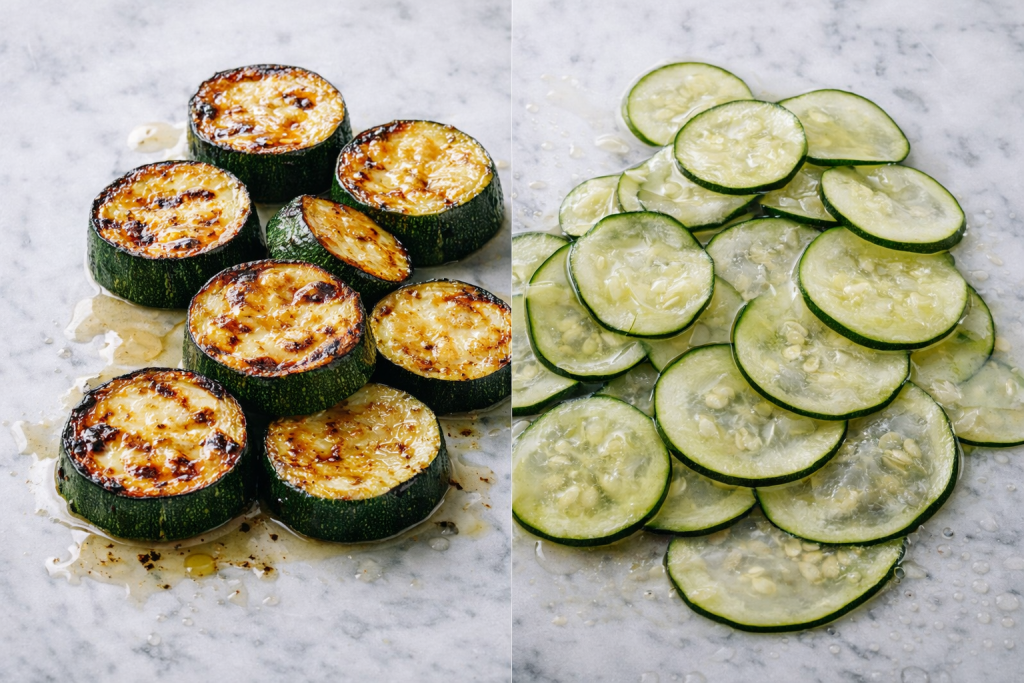
Zucchini is made up of mostly water, which is both its strength and its challenge. Every time a knife breaks through its flesh, moisture escapes. The size and shape of the cut determine whether that moisture evaporates or overwhelms the dish.
When I roast thick zucchini pieces, the exterior caramelizes while the inside stays tender. Thin slices, however, release water too quickly for roasting but perform beautifully in fast sautés. This difference is not subtle. It’s the reason some zucchini dishes taste rich and others feel diluted.
Flavor absorption also changes with cut size. Smaller pieces expose more surface area, allowing marinades and seasonings to cling more effectively. Larger cuts rely more on browning and natural sweetness. Learning how to cut zucchini with these principles in mind helped me stop blaming recipes and start adjusting technique instead.
Once I respected how zucchini reacts to heat and moisture, I stopped fighting it and started working with it.
Essential Tools That Improve Consistency and Safety
I learned early on that zucchini punishes dull knives. Its smooth skin causes blades to slide instead of bite, which leads to uneven cuts and unnecessary risk. A sharp chef’s knife became my most important tool, not for speed, but for control.
A stable cutting board is just as critical. I prefer wood or bamboo boards that grip the counter and don’t shift mid-cut. Space matters too. Crowded boards encourage rushed movements and sloppy sizing.
For specialty cuts, I use simple tools that earn their place: a Y-shaped peeler for ribbons, a spiralizer for noodles, and a box grater for shredding. None of these replace knife skills, but they ensure consistency when texture matters and make learning how to cut zucchini easier for different preparations.
Good tools don’t make someone a better cook automatically, but they remove obstacles that interfere with good technique.
Preparing Zucchini Before the First Cut
Preparation affects the final result more than most people realize. I always rinse zucchini thoroughly and dry it completely. Even a small amount of surface moisture can cause slipping and uneven cuts.
I trim both ends cleanly. The stem end is fibrous, and the blossom end can be bitter. Removing them improves both texture and flavor.
For long zucchini, I cut them crosswise into manageable sections before shaping them further. This keeps cuts uniform and reduces hand strain.
I rarely peel zucchini. The skin provides structure and fiber, and removing it often causes the flesh to soften too quickly during cooking. Unless a recipe demands otherwise, the skin stays.
These steps may feel minor, but they set the foundation for how to cut zucchini successfully and ensure every cut that follows is clean, uniform, and effective.
How to Cut Zucchini Into Rounds and Half-Moons
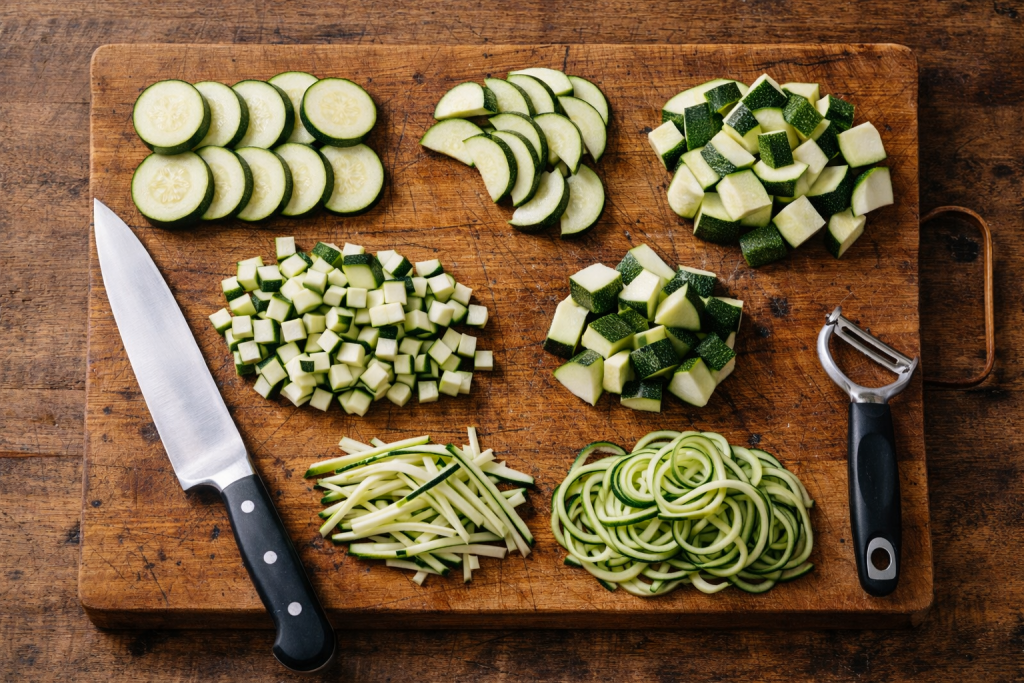
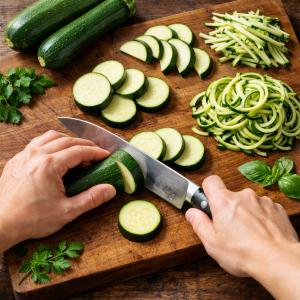
Rounds are the simplest and most forgiving cut, especially for roasting and grilling. I place the zucchini horizontally on the board and slice straight down with the blade perpendicular to the surface. Thickness matters. Half-inch rounds roast well, while thinner rounds cook quickly in a pan.
Half-moons begin by slicing the zucchini lengthwise. I place the flat side down to prevent rolling, then cut across into even pieces. This shape exposes more surface area, which improves browning and speeds up cooking.
I use these cuts frequently for grain bowls, pasta alternatives, and vegetable medleys. They cook predictably and integrate well with other ingredients without dominating the dish.
Consistency is more important than speed here. Uniform cuts ensure even cooking and a balanced texture throughout the meal.
The Best Way to Cut Zucchini for Dices and Chunks
Dicing requires more steps, but the payoff is control. I start by cutting the zucchini into shorter segments, then slice each piece lengthwise into planks. Those planks become strips, and the strips become cubes.
The size of the dice depends on cooking time. Smaller dice soften quickly and work best in quick sautés or sauces. Larger dice hold their shape in soups and stews.
Chunking follows a similar process but stops sooner. Quartered zucchini cut into thick pieces performs well in roasting and curries, where it needs structure to survive longer cooking.
I avoid mixing sizes within the same dish. Even small inconsistencies cause uneven texture, with some pieces dissolving while others remain firm.
How to Cut Zucchini Into Strips, Ribbons, and Noodles
Thin cuts require restraint. Julienned zucchini cooks in seconds and loses texture quickly if overexposed to heat. I create these cuts by trimming the zucchini into a flat-sided block, slicing thin sheets, then stacking and cutting them into matchsticks.
Zucchini ribbons are even more delicate. I use a peeler and draw it lengthwise, rotating the zucchini as I go. Once I reach the seedy core, I stop and reserve it for blended dishes.
Spiralized zucchini noodles require moisture management. After spiralizing, I lightly salt them and allow excess water to drain before cooking. This prevents watery sauces and preserves texture.
These cuts shine in raw or lightly cooked dishes where freshness and structure matter more than browning.
Managing Seeds and Excess Moisture
Large zucchini often contain developed seed cavities that release too much liquid during cooking. I cut them lengthwise and scrape out the center with a spoon when structure matters, such as for stuffing or roasting.
Salting zucchini selectively helps control moisture. I salt only when excess water would compromise the dish, then rinse and dry thoroughly.
Smaller zucchini rarely need this treatment. Knowing when to intervene prevents unnecessary steps while preserving flavor.
Moisture management is not optional with zucchini. Ignoring it leads to soggy results no matter how well seasoned the dish is.
Common Cutting Mistakes I Learned to Stop Making
The biggest mistake I made early on was cutting zucchini too far in advance. Once sliced, zucchini releases water rapidly. I now cut it close to cooking time unless draining is intentional.
Using dull knives caused more damage than I realized. Clean cuts preserve texture, while crushed flesh releases moisture prematurely.
Rushing also leads to uneven sizing. Slowing down slightly improves consistency and final texture far more than shaving off a few seconds.
These adjustments eliminated most of my zucchini-related disappointments.
Matching Cuts to Cooking Methods
Roasting requires larger cuts that can withstand high heat without collapsing. I favor thick rounds and chunky quarters for this method.
Sautéing benefits from thinner cuts that cook quickly and evenly. Half-moons and small dice work best here.
Grilling demands stability. Lengthwise planks stay intact and develop clean grill marks without slipping through grates.
Raw applications rely on thin, elegant cuts like ribbons and julienne strips. These preserve zucchini’s crispness and light flavor.
Understanding how to cut zucchini for each cooking method eliminates the need for corrective steps later and ensures consistently delicious results.
Garlic Herb Zucchini Rounds
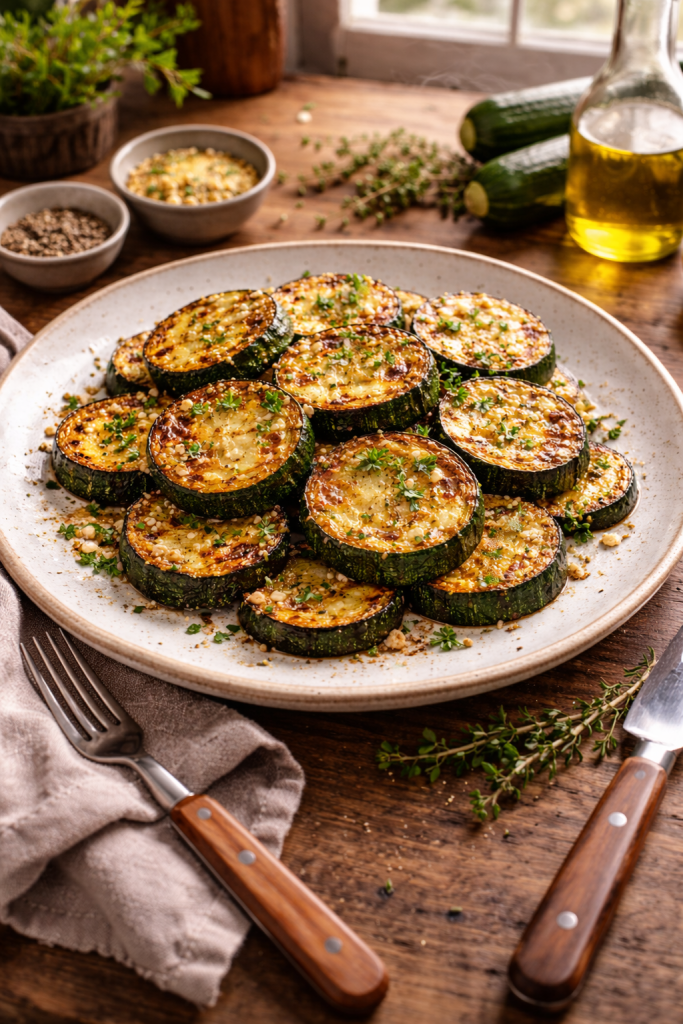
This simple preparation demonstrates how thick rounds develop gorgeous caramelization when roasted at high temperature. The substantial cut prevents the zucchini from becoming mushy while creating crispy, golden edges.
Ingredients:
- 4 medium zucchini, cut into half-inch rounds
- 3 tablespoons olive oil
- 4 cloves garlic, minced
- 2 teaspoons fresh thyme leaves
- 1 teaspoon dried oregano
- 1/2 teaspoon sea salt
- 1/4 teaspoon black pepper
- 2 tablespoons nutritional yeast
- Fresh parsley for garnish
Instructions:
- Preheat your oven to 425°F and line a large baking sheet with parchment paper.
- Cut zucchini into uniform half-inch rounds, ensuring consistent thickness for even cooking.
- In a large bowl, combine olive oil, minced garlic, thyme, oregano, salt, and pepper.
- Add zucchini rounds to the bowl and toss gently until each piece is evenly coated.
- Arrange rounds in a single layer on the prepared baking sheet, ensuring they don’t overlap.
- Roast for 20 to 25 minutes, flipping once halfway through, until golden brown and tender.
- Remove from the oven and sprinkle with nutritional yeast while still hot.
- Garnish with fresh parsley and serve immediately.
The thick rounds maintain structural integrity during roasting while developing concentrated sweetness and crispy edges that make this side dish irresistible.
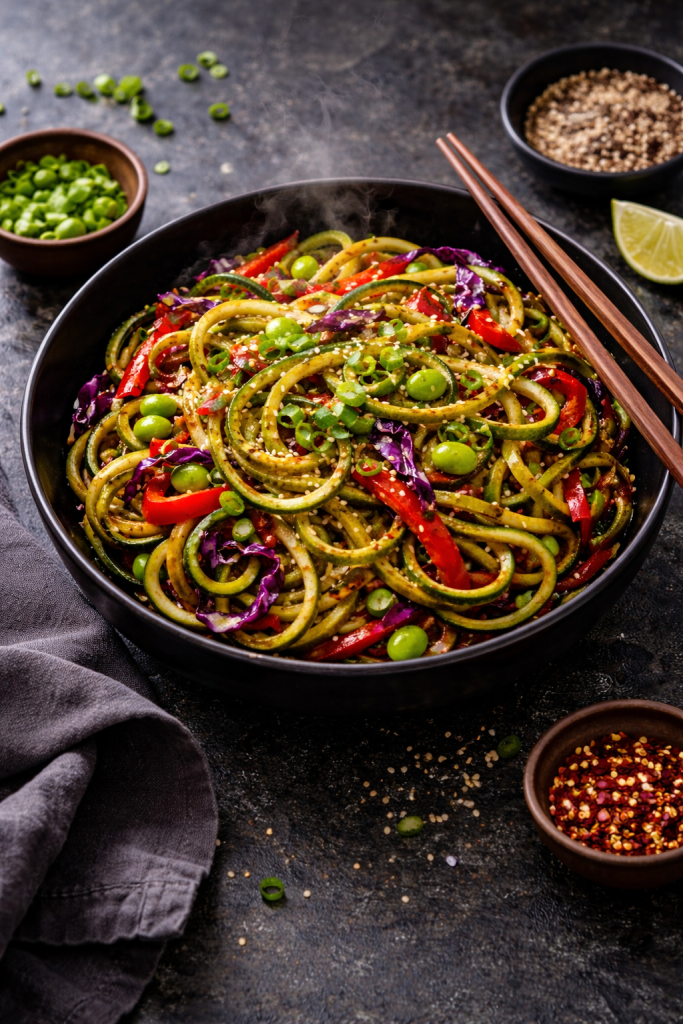
Asian-Style Zucchini Noodle Stir-Fry
Spiralized zucchini noodles showcase an entirely different texture and cooking approach. The thin strands require minimal cooking time and absorb flavors beautifully in this quick, nutritious meal.
Ingredients:
- 3 medium zucchini, spiralized into noodles
- 1 red bell pepper, thinly sliced
- 2 cups shredded purple cabbage
- 1 cup edamame, shelled
- 3 tablespoons tamari or soy sauce
- 2 tablespoons rice vinegar
- 1 tablespoon sesame oil
- 2 teaspoons fresh ginger, grated
- 2 cloves garlic, minced
- 1 tablespoon sesame seeds
- 3 green onions, sliced
- Red pepper flakes to taste
Instructions:
- Spiralize zucchini into noodles and place in a colander. Sprinkle lightly with salt and let rest for 10 minutes to release excess moisture.
- Pat zucchini noodles dry with paper towels and set aside.
- In a small bowl, whisk together tamari, rice vinegar, sesame oil, ginger, and garlic.
- Heat a large wok or skillet over medium-high heat. Add bell pepper and cabbage, stir-frying for 3 minutes.
- Add edamame and cook for another 2 minutes.
- Add zucchini noodles and sauce to the pan. Toss continuously for 2 to 3 minutes until noodles are just tender but still have bite.
- Remove from heat immediately to prevent overcooking.
- Garnish with sesame seeds, green onions, and red pepper flakes.
The spiralized cut creates noodles that cook in mere minutes, maintaining a pleasant texture that mimics traditional pasta while keeping the dish light and vegetable-forward.
Seasonal Considerations and Zucchini Selection
Zucchini changes noticeably as the season progresses, and I adjust my cutting and prep accordingly. Early-summer zucchini (June–July) are smaller, tender, and have thin skin, so they require little preparation and cook quickly no matter how they’re cut.
By late summer (August–September), zucchini grow larger with thicker skin and more developed seeds. For these, I often remove the seeds and use larger cuts that hold up better during longer cooking.
I always choose zucchini that feel firm and heavy for their size, with smooth, glossy skin. Soft spots or wrinkling signal age and moisture loss, which affects texture no matter how well the zucchini is cut.
Storing Cut Zucchini Properly
Once zucchini is cut, proper storage is key to preserving quality. I place unused pieces in an airtight container lined with paper towels to absorb excess moisture, then refrigerate and use within 24 hours for the best texture and flavor.
For longer storage, I avoid cutting zucchini ahead of time. Whole zucchini keeps well in the crisper drawer for up to a week, retaining its firmness and freshness. Once sliced, natural enzymes speed up moisture loss and deterioration.
If I have leftover cut zucchini I can’t use right away, I blanch it briefly, cool it in ice water, and freeze it in portion-sized bags. While freezing softens the texture, it works perfectly for cooked dishes like soups, sauces, and baked goods where knowing how to cut zucchini properly beforehand ensures uniform pieces that cook evenly even after thawing.
Building Confidence in Your Cutting Skills
I didn’t master these techniques overnight. I built them the same way I build wellness habits — one small, intentional step at a time. I focused on one cutting style each week, practicing rounds before moving to half-moons, then dice, gradually expanding my skills with patience instead of pressure.
Over time, I noticed something deeper than improved knife speed. The steady rhythm of slicing zucchini became meditative. Meal prep stopped feeling like a task and started feeling like a grounding ritual — a moment of connection with my food and myself.
In my wellness coaching, I often remind clients that confidence isn’t born from perfection; it’s built through repetition and trust. The same is true in the kitchen. Even imperfectly cut zucchini nourishes you. What matters is showing up, practicing, and allowing progress to unfold.
When you learn how to cut zucchini with intention, you’re doing more than preparing a vegetable. You’re strengthening patience, resilience, and self-belief — skills that extend far beyond the cutting board and into every area of your plant-based lifestyle.
*We may earn a commission for purchases made using our links. Please see our disclosure to learn more.