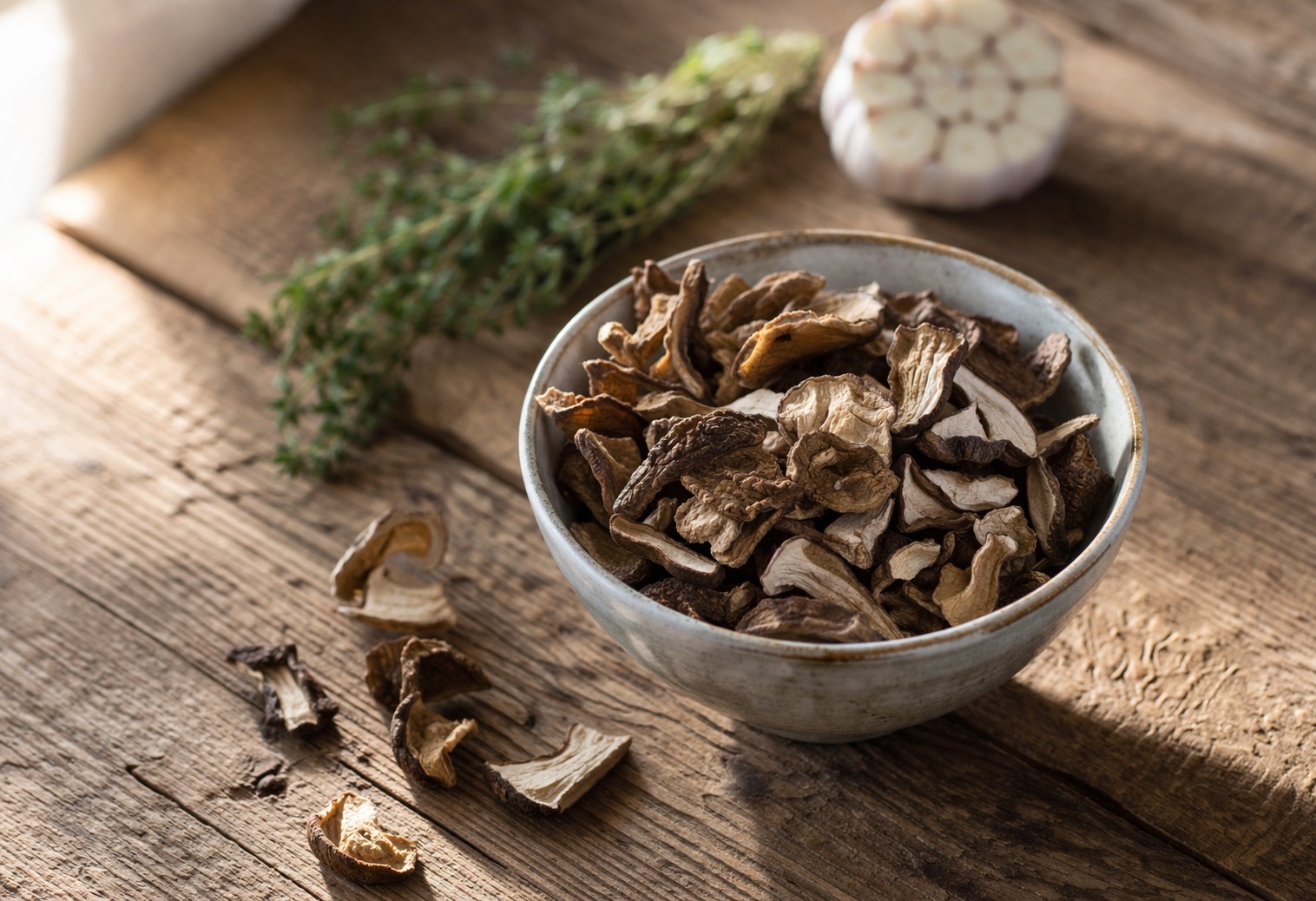
If there is one ingredient worth adding to a plant-based pantry, it’s dried porcini mushrooms. Not because they’re trendy or complicated, but because they consistently do something few staples can: add genuine depth. Drop them into warm water and within minutes the kitchen smells earthy, rich, and savory – a clear signal of how much flavor is packed into each piece.
For anyone cooking plant-based, flavor can be the first real challenge. Dishes can feel flat or incomplete, missing that low, resonant note that makes food feel satisfying rather than just nutritious. Porcini mushrooms address that directly. Their concentrated umami intensity transforms simple preparations – a grain bowl, a pasta sauce, a lentil stew – into something that feels complete and considered.
This article is a practical guide to working with this ingredient from start to finish: how to select and store them, how to rehydrate them correctly, which flavors they pair with naturally, and how to use them confidently across different meals. If you’re using them for the first time or simply want to get more out of a familiar ingredient, everything here is designed to be immediately useful in a plant-based kitchen.
Why Dried Porcini Mushrooms Are a Plant-Based Pantry Essential
The Nutritional Case
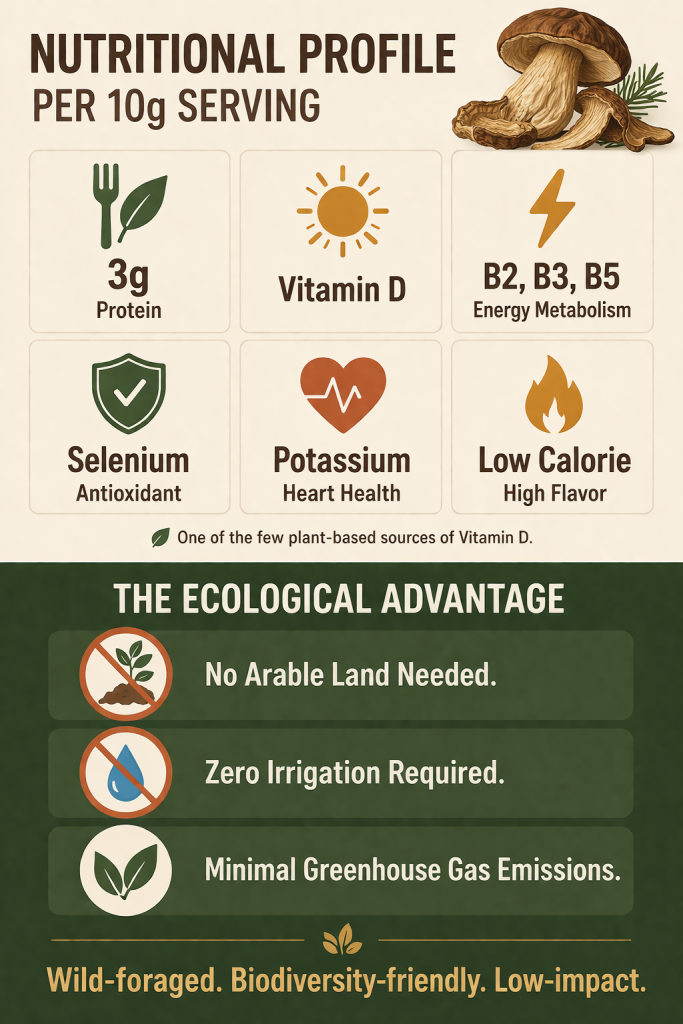
Dried porcini mushrooms are more nutritionally significant than most people realize. A 10-gram serving of dehydrated porcini delivers roughly 3 grams of protein alongside B vitamins – B2, B3, and B5 – which are critical for energy metabolism and often underrepresented in plant-based diets.
They’re also one of the few non-animal sources of Vitamin D, particularly when sun-dried. Selenium, potassium, and copper round out the mineral profile, making them a genuinely functional food rather than just a flavoring agent. Despite this density, they’re remarkably low in calories. The flavor they contribute is completely disproportionate to their caloric footprint – exactly what makes them so valuable in plant-based cooking.
The Ecological Case
Beyond nutrition, there’s a strong environmental case for using porcini regularly. Mushrooms require no arable land, no irrigation, and produce a fraction of the greenhouse gases associated with animal agriculture. Porcini are often wild-foraged from established forest ecosystems, meaning their harvest supports biodiversity rather than disrupting it. When sourced responsibly, they represent one of the most low-impact flavor and protein sources available to the home cook.
How to Select and Store Dried Porcini
What to Look For
Quality varies widely, and the difference between a good and poor batch is significant. Look for uniform, substantial pieces rather than dust and fragments; color should range from golden tan to deep brown; and the aroma should be strong and complex even through the packaging. If it doesn’t smell like much in the bag, it won’t contribute much to the pan.
Wild-harvested and organically certified options consistently deliver better flavor. Italian and Eastern European brands tend to outperform generic supermarket versions. Avoid anything with visible mold, unexplained white powder, or a musty off-odor – those are signs of poor storage or age.
How to Store Them Properly
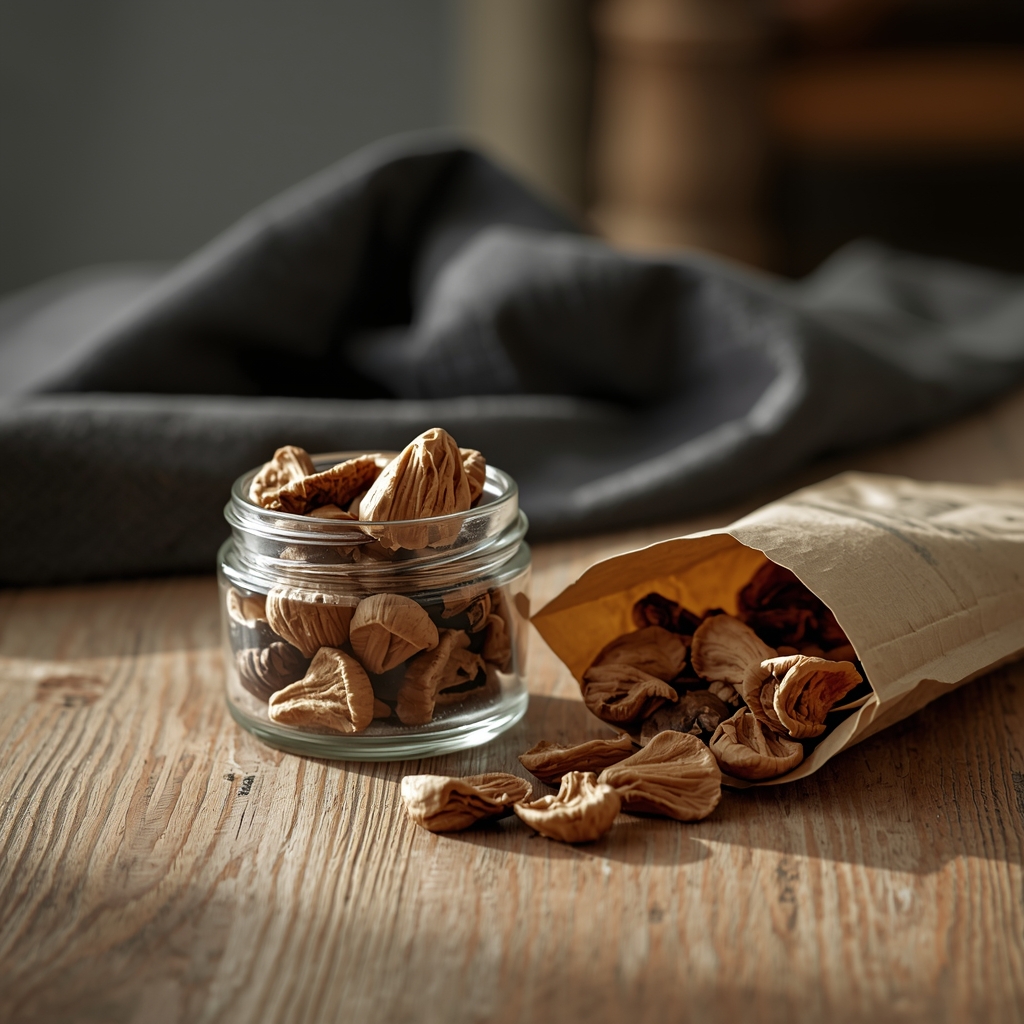
Store dried porcini in an airtight glass jar, away from heat, light, and humidity. A dark cupboard works well, and properly stored mushrooms stay excellent for up to two years. For bulk purchases, vacuum-sealed bags extend shelf life even further.
Moisture is the main risk. Even brief exposure to a humid kitchen environment can trigger spoilage. A simple smell test is the most reliable indicator – good porcini smell earthy and forest-like, not musty or damp.
Foolproof Methods for Rehydrating Dried Porcini Mushrooms
The Key Principle
Rehydration is where most of the flavor potential is either captured or lost. The most important thing to understand is that the soaking liquid is not waste – it’s a concentrated, deeply savory broth that carries the full essence of the mushrooms. Discarding it means losing half the ingredients.
Always strain the soaking liquid through a fine sieve lined with a paper towel before using it, to remove any grit or sediment. For the soaking itself, warm water works better than boiling, which can damage delicate aromatic compounds. Most pieces need twenty to thirty minutes. Adding a crushed garlic clove, a bay leaf, or a splash of dry white wine to the soaking water adds further complexity.
Step-by-Step Rehydration
- Inspect the mushrooms and discard any discolored or moldy pieces.
- Measure 20 to 30 grams – enough for four servings.
- Place in a heatproof bowl and cover with 1 to 1.5 cups of warm water.
- Add aromatics if desired: garlic, thyme, or peppercorns.
- Cover with a plate and soak for 20 to 30 minutes until soft and pliable.
- Lift mushrooms out gently to avoid disturbing sediment at the bottom.
- Strain the soaking liquid through a paper towel-lined sieve and reserve it.
- Squeeze excess liquid from the mushrooms, then chop or slice as needed.
Elevating Everyday Meals with Dried Porcini Mushrooms
Core Cooking Techniques
Once rehydrated, sautéing porcini in a hot pan with olive oil is the most effective technique for building flavor. High heat drives off moisture and encourages caramelization – that golden-brown surface is where the intensity concentrates. Avoid crowding the pan, and resist stirring too early.
A second approach worth knowing: grinding dry porcini pieces into a fine powder using a spice grinder. This umami powder is one of the most versatile tools in a plant-based kitchen. A half-teaspoon stirred into tomato sauce, sprinkled over roasted vegetables, or whisked into a vinaigrette adds significant savory depth with no visible texture – useful for dishes where mushroom pieces aren’t wanted.
The reserved soaking liquid works well reduced into a pan sauce or used as the base for a risotto or plant-based gravy.
Practical Meal Applications
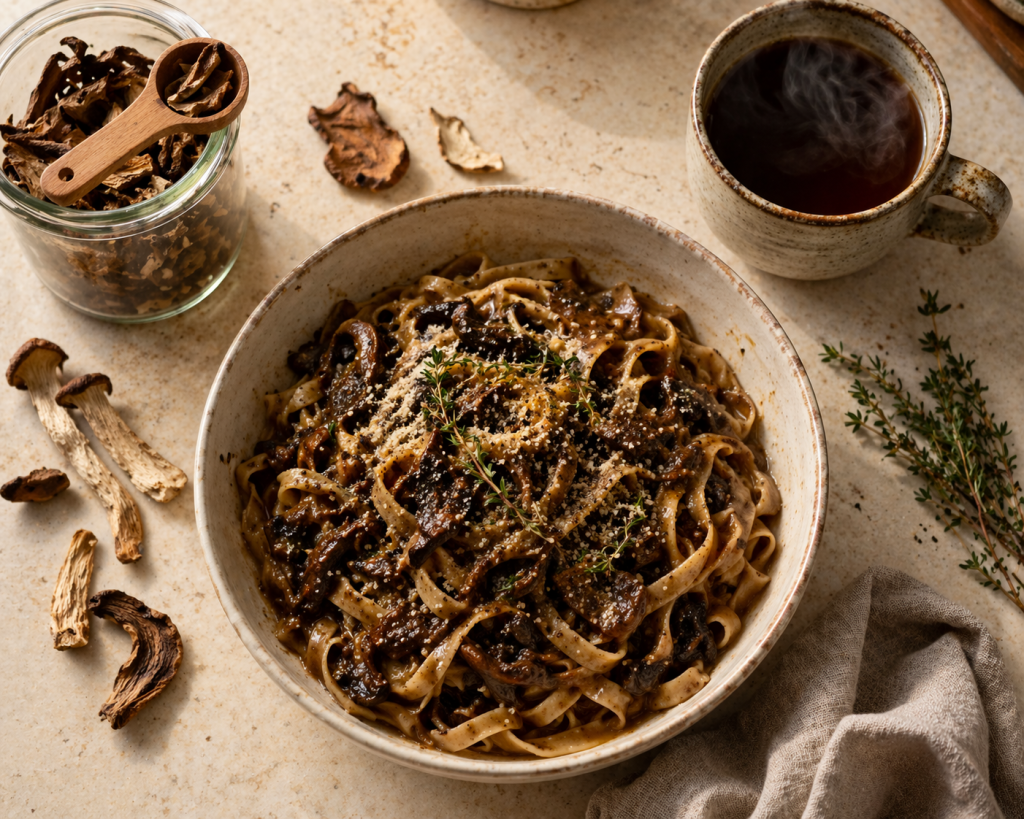
In plant-based cooking, porcini work well across every meal type. For breakfast, a tofu scramble with rehydrated porcini and wilted spinach is both protein-rich and deeply savory. At lunch, a farro bowl with porcini-infused dressing and roasted vegetables makes a satisfying, complete meal. For dinner, creamy porcini pasta with cashew cream and nutritional yeast is a reliable crowd-pleaser. As an appetizer, porcini paté – blended with white beans, lemon, and garlic – spreads easily onto crostini and works well for entertaining.
Flavor Pairings That Work Well
Classic Combinations
Porcini and garlic are a foundational pairing in Italian cuisine, each amplifying the other’s savory character. Thyme complements porcini’s earthy, woodsy quality particularly well in slow-cooked preparations. Plant-based Parmesan or nutritional yeast alongside porcini produces a richness that holds up well as a sauce base. Truffle oil adds another layer of umami depth for more indulgent dishes. Tomatoes provide the bright acidity that keeps porcini’s earthiness from feeling heavy.
Plant-Based Ingredient Synergies
Pairing porcini with lentils is one of the most practical combinations in plant-based cooking – both contribute meaty density, and together they create something genuinely substantial. Cashew cream and porcini build a velvety, rich sauce with real depth. Eggplant braised alongside porcini and tomatoes produces a satisfying texture and layered flavor. Tempeh sautéed with rehydrated porcini makes a protein-rich grain bowl component that needs minimal additional seasoning.
The Ultimate Plant-Based Porcini Mushroom Recipe
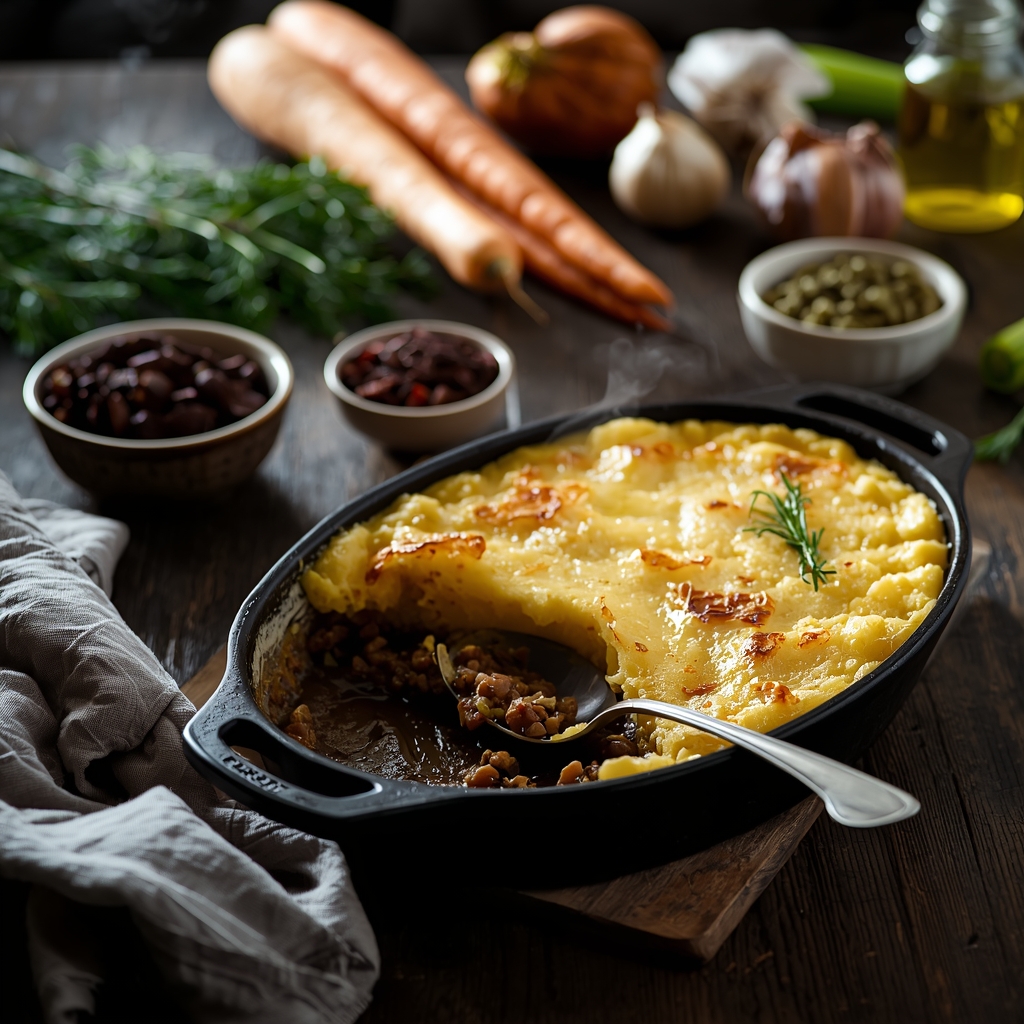
Porcini and Lentil Shepherd’s Pie with Porcini Gravy
This recipe puts porcini at the center of a complete, hearty plant-based meal. The lentil filling is rich and filling, the porcini gravy adds depth, and the mashed potato topping makes it genuinely comforting.
Serves 4
Prep: 25 min
Cook: 45 min
Ingredients:
- 30g dried porcini mushrooms, rehydrated (reserve 1 cup soaking liquid)
- 250g cooked green lentils
- 1 large onion, diced
- 3 garlic cloves, minced
- 2 carrots
- 2 celery stalks, diced
- 2 tbsp tomato paste
- 1 tsp thyme,
- 1 tbsp soy sauce
- 800g potatoes
- 2 tbsp plant-based butter,
- 3 tbsp plant-based milk
- 3 tbsp olive oil
- salt and pepper
Instructions:
- Boil potatoes for 15 minutes, drain, and mash with butter, milk, and salt. Set aside.
- Heat 2 tbsp oil over medium-high. Cook onion for 5 minutes until soft.
- Add garlic, carrots, and celery. Cook 5 minutes more.
- Add chopped porcini; cook 3 minutes until caramelized.
- Stir in tomato paste, thyme, and soy sauce. Cook for 2 minutes.
- Add lentils and soaking liquid. Simmer for 10 minutes to a glossy gravy.
- Spread mashed potatoes over filling, drizzle with remaining oil.
- Bake at 200°C for 20 minutes until golden. Rest 5 minutes before serving.
Frequently Asked Questions About Dried Porcini Mushrooms
Why are my rehydrated mushrooms gritty?
This comes from sediment that settles at the bottom of the soaking bowl. Always lift mushrooms out gently rather than pouring, and strain the liquid through a paper towel-lined sieve before using it.
The soaking liquid tastes very salty – is that normal?
Yes. Porcini have a naturally high sodium content, and soaking concentrates it. Taste the liquid before adding it to a dish and reduce any additional salt accordingly.
Can I substitute dried porcini for fresh mushrooms?
Yes. As a general guide, 30g of dried porcini is equivalent to approximately 200g of fresh. The dried version will deliver more intense flavor, so reduce any added liquid slightly to account for the moisture fresh mushrooms would otherwise contribute.
Where can I find affordable dried porcini?
Italian delis, Polish and Chinese grocery stores, and online retailers typically offer the best value. Buying in larger quantities reduces the per-gram cost considerably.
Why do my mushrooms float during soaking?
This is normal. Weigh them down with a small plate or push them under with a spoon occasionally.
Start Using Dried Porcini Mushrooms Today
The case for using dried porcini mushrooms in plant-based cooking comes down to practicality: they are shelf-stable, affordable in quantity, nutritionally solid, and capable of adding a level of flavor complexity that very few ingredients can match. For anyone cooking without meat, that kind of depth is genuinely valuable.
Getting started doesn’t require a new recipe or a big commitment. Stir a teaspoon of porcini powder into a pasta sauce this week. Add the reserved soaking liquid to a vegetable soup. Try the shepherd’s pie recipe on a weekend and see how far a small amount of the ingredient goes. The results speak for themselves.
For further reading, food scientist Harold McGee’s work on umami is a useful reference, and Italian and Eastern European wild mushroom suppliers online often carry high-quality options at reasonable prices. The world of dehydrated porcini rewards those who take the time to use them well.
*We may earn a commission for purchases made using our links. Please see our disclosure to learn more.